
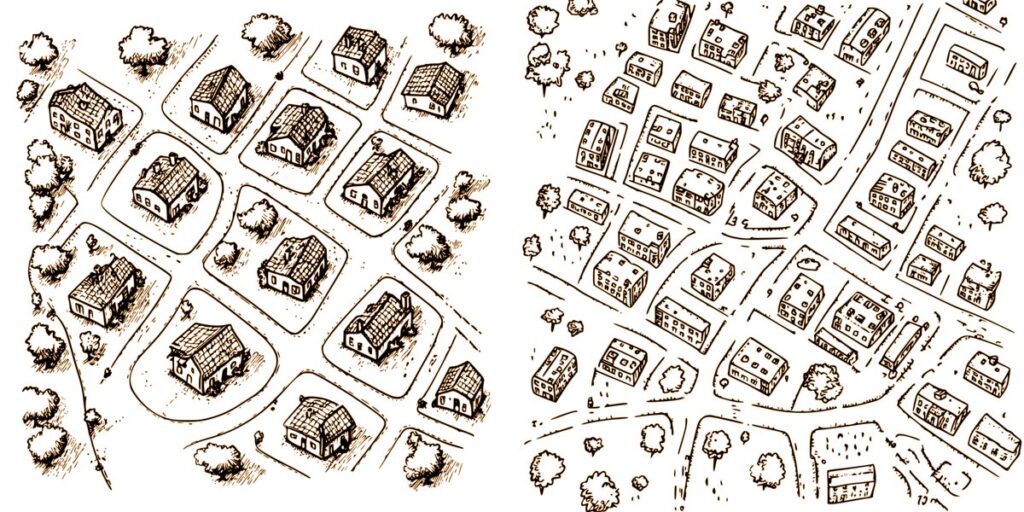
A Neighborhood with a Natural Name
Blue Jay Woodlands is the kind of Palm Harbor neighborhood that can feel established without ever seeming stuck in the past. Its streets—Blue Jay Circle, Cardinal Trail, Robin Trail, and Hummingbird Trail—suggest the wooded, bird-friendly setting that has long been part of its identity. Today, mature landscaping, broad residential lots, and a relaxed coastal atmosphere give the community a settled character, but the neighborhood is still relatively young by Palm Harbor standards.
The subdivision took shape during the late 1970s and early 1980s, when Palm Harbor was changing rapidly from a small rural and coastal community into one of northern Pinellas County’s most desirable residential areas. Public property records place many of the original Blue Jay Woodlands homes around 1979 through 1981, with later construction continuing in selected lots and phases. The result is a neighborhood where original ranch-style houses stand alongside remodeled homes and a smaller number of newer builds.
From Rural Palm Harbor to Residential Community
To understand Blue Jay Woodlands, it helps to picture Palm Harbor before the modern subdivision era. The wider community grew from late-19th-century settlement, agriculture, citrus, fishing, and tourism. Historic Palm Harbor developed around transportation routes, the railroad, the harbor, and the appeal of Florida’s mild winters. Over time, groves and open tracts gave way to schools, churches, shopping areas, and residential neighborhoods.
The county’s historic resources describe Palm Harbor as a community with roots reaching back to the settlement once known as Sutherland. Local landmarks such as the Hartley House, now associated with the Palm Harbor Museum, help preserve that earlier story. Blue Jay Woodlands belongs to a later chapter: the postwar and late-20th-century expansion that brought more single-family neighborhoods to the area.
By the time homes began appearing along Blue Jay Circle and the surrounding trails, Palm Harbor had become attractive to families seeking quiet streets while remaining close to U.S. 19, the Gulf beaches, Tarpon Springs, and Clearwater. Klosterman Road provided an important east-west connection, and the neighborhood’s location offered a comfortable balance between suburban convenience and the greenery associated with older Florida properties.
How Blue Jay Woodlands Got Its Name
There does not appear to be a widely published official explanation for the neighborhood’s name. That absence is part of the charm: Blue Jay Woodlands seems to have been named as much for atmosphere as for a single historical event.
The name combines two ideas familiar to longtime Palm Harbor residents. “Blue Jay” evokes the common Florida bird often seen in oak trees, pine branches, and backyard feeders. “Woodlands” reflects the leafy character that developers wanted to preserve or suggest as homes were built. The street names reinforce that theme. Cardinal Trail, Robin Trail, Hummingbird Trail, and Blue Jay Circle create a small vocabulary of native and familiar birds, making the neighborhood feel connected to the natural world even as it was designed for modern living.
It is also important not to confuse Blue Jay Woodlands with Blue Jay Estates, a separate age-restricted community on Curlew Road. Blue Jay Estates began in the late 1970s as a 235-home manufactured-home community and later became known for its clubhouse, pool, activities, and strong resident organization. Its history is documented in resident newsletters, including recollections of the first surveys, early boards, and the community’s transition to a 55-and-over designation. Blue Jay Woodlands, by contrast, is primarily a single-family subdivision in the 34683 area.
Building in Phases
Blue Jay Woodlands developed in phases rather than appearing all at once. Real-estate and public-record descriptions identify Blue Jay Woodlands Phase 1, Phase 2, and Phase 3. Cardinal Trail and Blue Jay Circle are among the streets associated with the earlier portions of the neighborhood, while Hummingbird Trail is identified with Phase 3. Plat references show that the later phase was formally recorded in Pinellas County public records, giving the neighborhood a paper trail as well as a physical one.
The phased development explains some of the neighborhood’s variety. Many houses date from the 1980s and reflect the practical Florida architecture of that period: one-story layouts, attached garages, screened patios, low-pitched roofs, and open living areas. Other properties have been expanded, rebuilt, or extensively renovated. Recent records also show newer construction appearing on individual lots, demonstrating how established neighborhoods can continue evolving without losing their original street pattern.
Nearby Places That Tell the Larger Story
Blue Jay Woodlands does not depend on a grand monument or historic building within its boundaries. Its heritage is better understood through the surrounding Palm Harbor landscape.
A short drive away, Wall Springs Park preserves 210 acres of coastal habitat and connects with the Pinellas Trail. The park’s springs, boardwalks, and wooded areas offer a reminder of the natural systems that shaped northern Pinellas County before residential development. The Pinellas Trail, meanwhile, links neighborhoods, parks, and coastal communities through a corridor that has become part of everyday life for walkers and cyclists.
John Chesnut Sr. Park on Lake Tarpon provides another nearby example of the region’s natural heritage. Its 255 acres include trails, lake views, wildlife habitat, and access to the water. These places help explain why a neighborhood name such as Blue Jay Woodlands feels appropriate: even in a built environment, Palm Harbor remains closely tied to trees, birds, wetlands, and open water.
For cultural history, the Palm Harbor Museum and nearby downtown landmarks provide a connection to the community’s earlier settlement era. Pop Stansell Park, the Palm Harbor Library, and the historic core along Florida Avenue continue to serve as gathering places where local memory is kept alive through events, exhibits, and everyday community life.
How the Neighborhood Has Evolved
Over the decades, Blue Jay Woodlands has changed in ways familiar to many established Florida neighborhoods. Original homeowners have moved, houses have been resold, and younger families have joined longtime residents. Kitchens and bathrooms have been modernized, pools and additions have appeared, and landscaping has matured into the leafy canopy residents value today.
At the same time, the neighborhood’s basic identity has remained remarkably consistent. The street names still point toward birds. The homes still occupy a quiet residential setting. The community remains close to Palm Harbor’s historic center, Gulf beaches, parks, schools, and commercial corridors without feeling like a major subdivision.
That balance is what makes Blue Jay Woodlands special. Its history is not the story of one famous building or dramatic event. It is the quieter story of land becoming home: wooded ground surveyed, streets laid out, houses built, and generations of residents adding their own chapters. In Blue Jay Woodlands, Palm Harbor’s past and present meet beneath the trees—one familiar bird name, one well-loved street, and one neighborly memory at a time.